

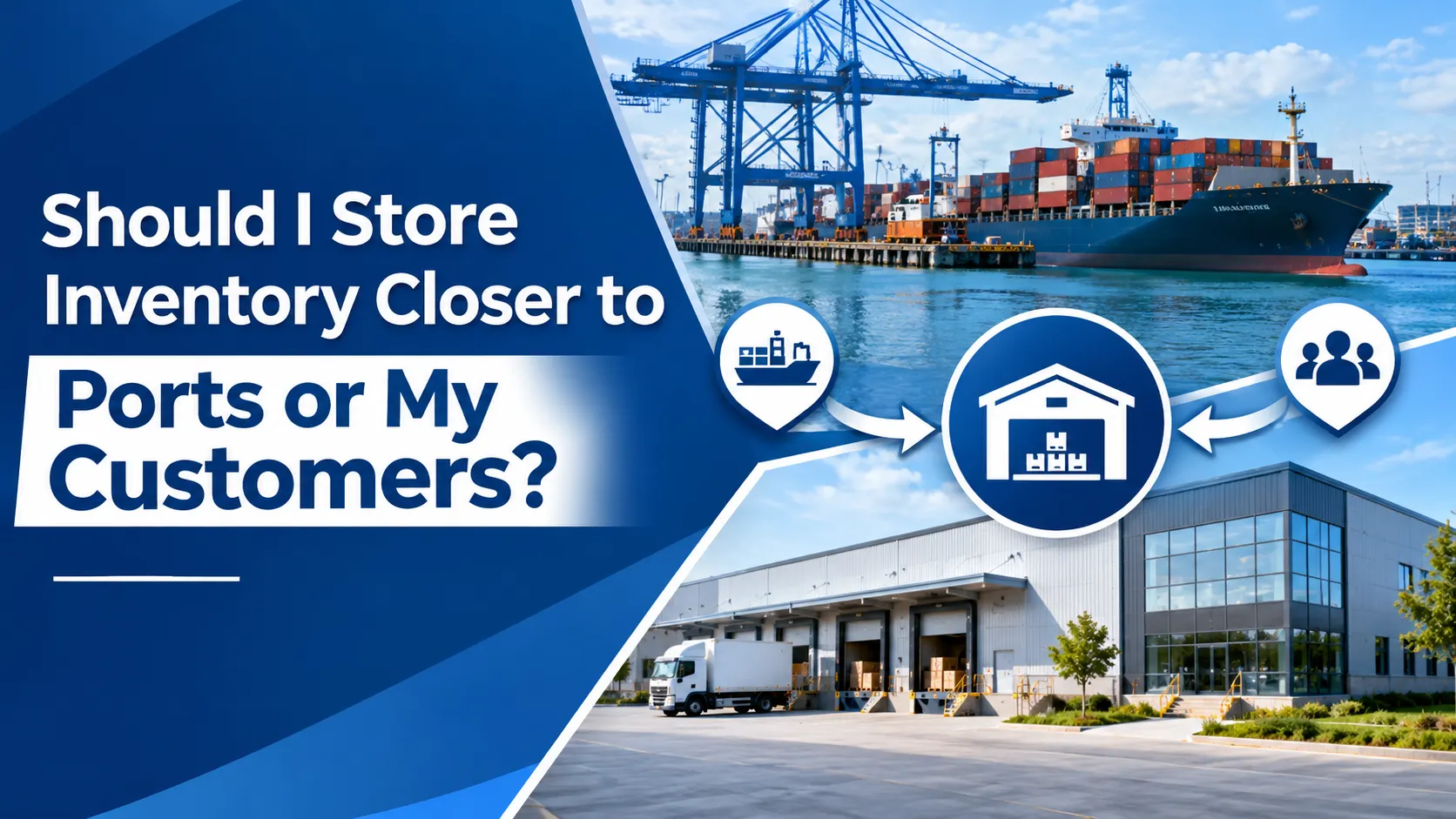
Supply chain decisions go beyond inventory location. Once you sign a lease, the decision is final. A common question is whether to keep inventory near the port or move it closer to buyers. In truth, the answer depends on what you’re selling, where buyers are, and how quickly they need their goods. The trends below will help you decide whether to take up a warehouse in Kolkata.
Storing Near the Port
Proximity to a seaport benefits importers for several reasons. After your goods arrive by sea, storing inventory near the seaport helps cut lead times and transport costs from the port. It helps avoid long-distance haulage after clearing containers quickly and cheaply.
However, this does not mean space close to ports is widely available, even as nationwide warehouse costs decline. Experts say ports are becoming points of flow, not storage. The real question is how long they stay at the port.
Keeping the Inventory Near Customers
The biggest trend right now is positioning the business around customers. According to a forecast by Prologis, customers are shifting inventory and moving products closer to when they will be consumed to cut transportation costs and improve customer service. These trends can be explained as follows.
- Delivery expectations: in urban centres, customers expect delivery within 1-2 days (and even same-day delivery).
- Reduced cost in last-mile deliveries: lower distances mean lower costs and better delivery times, plus lower damage levels.
- Stable supply chains: businesses are turning from “big warehouse” strategies to flexible networks.
Another key finding is that reliability matters more to customers than delivery speed.
The Real Solution: A Hybrid System
Most businesses in the growth stage opt for a hybrid solution. They keep large quantities of supplies or slow-moving stock in a connected hub and supply fast-moving goods to a location close to the hottest spots in their customer base. As some authors in the field note, no single location works for all businesses. It depends on the particularities of their customers, how their products move, and whether they sell through e-commerce, retail, or wholesale channels.
To decide where you fall, ask four questions first:
- Where is my customer base primarily residing? Map orders by pin code.
- How urgent is their delivery expectation? Offering same-day service is a completely different logistical exercise than accommodating deliveries over a few days.
- What share of my imports does it represent? The greater the sea freight volume, the bigger the role access to ports plays.
- How volatile is demand, and how much does it fluctuate? Unstable demand means a need for flexible, adaptable space.
Why Kolkata Offers a Useful Middle Path
Kolkata serves as a prime case of coexistence of both concepts. The city hosts Syama Prasad Mookerjee Port, the oldest operational port in India. The market in the background is emerging rapidly. Industrial and logistics inventory in Kolkata has crossed 24 million sq f,t which is the highest in East India. Take-up in H1 2026 has increased by 69 percent from the previous period.
Various investments are also underway in connectivity at the port. SMP Kolkata held an event on 7th October 2026 on the Balagarh Extended Port Gate System. The port authority has also planned to set up a multi-modal logistics park with warehouse and cold storage in its area as a hub to lower international trade expenses.
For many companies, having a warehouse in Kolkata on NH16 brings the best of both worlds. The NH16 corridor is often touted as the backbone of Kolkata’s warehousing boom. Key areas in this hub include Amta Ranihati Road, Jangalpur, Dhulagar,h and Uluberia. The corridor offers ample land and is well connected to the Kolkata and Haldia ports, making it an ideal location for businesses serving eastern India and shipments bound for the eastern ports.
If you are analysing the Ganesh Complex Ranihati warehouse, you are looking at the same rising area. However, before proceeding, check these factors out:
- Travel times: to the harbour, to Kolkata’s main client areas, and to NH16.
- Dock and truck access: loading bay design and turnaround for large vehicles.
- Scalability: whether you can add space as volumes grow.
- Power and utilities: Prologis expects power availability to rank among the top three factors in location selection globally in 2026.
- Visibility: make sure your warehouse management system can track stock accurately across locations.
Final Takeaway
Port storage benefits businesses when incoming products are plentiful, and your customs process is slow. Storage at the customer site offers advantages when quick deliveries and last-mile costs affect profitability. Indeed, for many companies, the optimal solution is a well-connected suburban logistics hub in a location such as NH16. A study found that companies with the best unit economics will treat port selection and warehousing as one decision.
Identify your customer roadmap, experiment with one site, and build from there.


Join The Discussion