
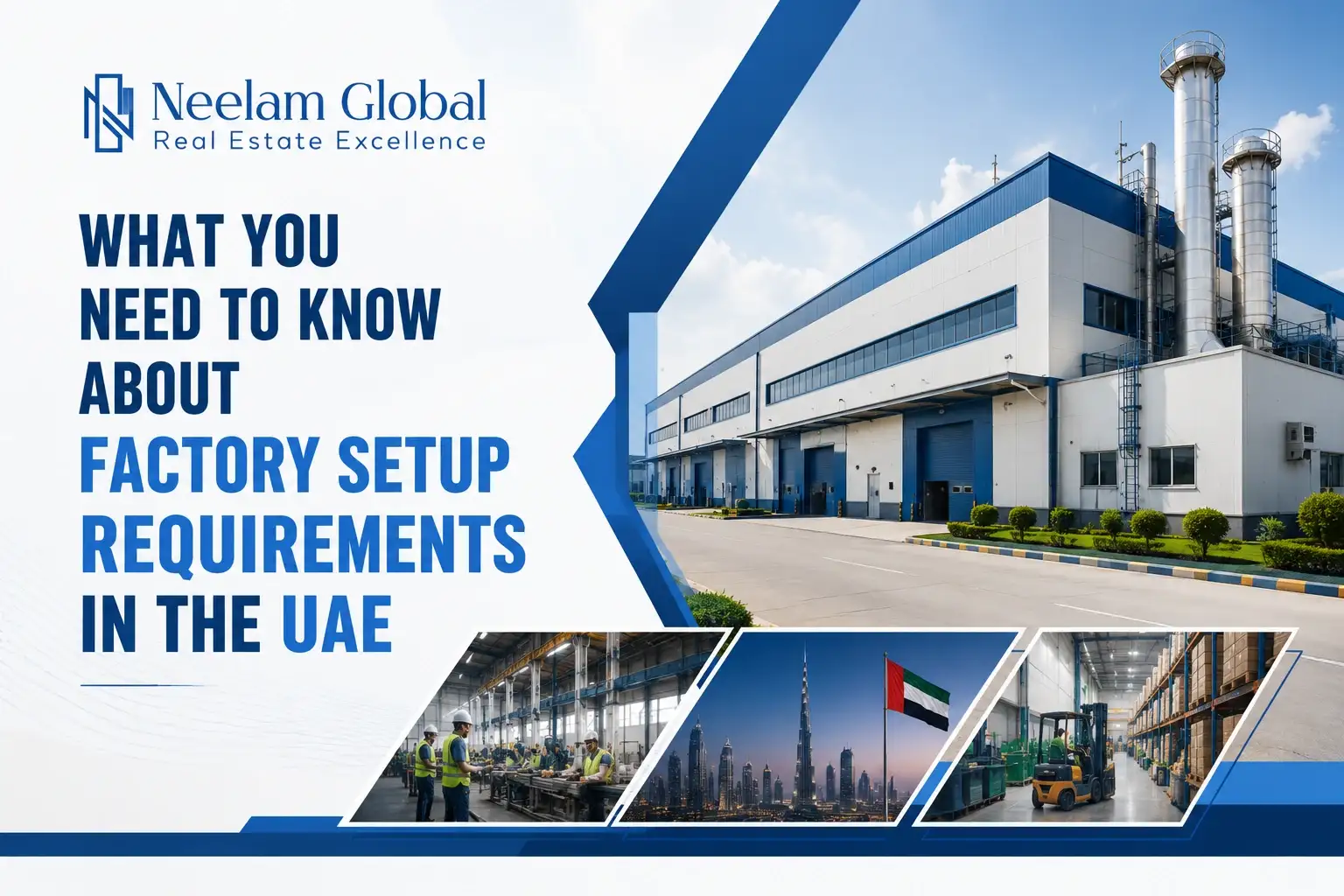
The UAE has turned into one of the most business and investment-friendly industrial locations in the world. With zero corporate tax on most operations, 100% foreign ownership in free zones, and world-class logistics infrastructure, entrepreneurs and manufacturers from across the globe are actively looking for a factory for rent in Dubai and the Emirates. Whether you are a startup searching for a small production unit or an established business ready to scale, understanding the specific setup requirements across key industrial locations, Jebel Ali, Sharjah, and Abu Dhabi, is the first step toward a successful operation.
License and Legal Rules: What Factory Owners Must Know
Obtaining the right license is a must before signing a lease on any industrial unit. An Industrial License, which authorises the production, processing, assembly, and packaging of goods, is needed for factory operations in the UAE. For operations on the mainland, this license can be obtained from the emirate’s Department of Economic Development (DED) or from a free zone authority. The right authority (JAFZA for Jebel Ali, SAIF Zone or Hamriyah for Sharjah, KEZAD for Abu Dhabi) can directly issue licenses for free zone setups. According to federal regulations, mainland factories must register with the Ministry of Industry and Advanced Technology (MoIAT) and, for large-scale operations, make a capital investment of at least AED 250,000.
Documents businesses need across the three locations include:
- Passports of all shareholders
- A business plan with detailed manufacturing activities
- A tenancy/lease agreement for the factory unit
- Approval from the civil defence or environmental authority
A No Objection Certificate (NOC) is usually the essential document required at all three locations if the applicant has a UAE residence visa under another sponsor. Environmental clearances are must for most manufacturing categories. The respective emirate’s environmental body must approve the operations before a factory can begin production.
Jebel Ali: A Hub of Foreign Trade
Businesses that require seamless international trade logistics can take a factory for rent in Jebel Ali for the best advantages. The Jebel Ali Free Zone, or JAFZA, is the largest free zone in the UAE. It’s the home to over 11,000 companies, including more than 100 Fortune 500 firms. Annual trade flowing through the zone exceeds $190 billion.
The cost of an industrial license at JAFZA ranges between AED 5,500 and AED 9,000. Companies must maintain a warehouse and a production facility within the free zone under a JAFZA industrial license. These factory units are perfect for heavy manufacturing and logistics operations because they have internal clearances of 6 to 12 meters and floor load capacities of up to 5 tons per square meter. JAFZA is the preferred base for export-oriented manufacturers aiming to reach the Middle East, Africa, and Asian markets. The location is close to Al Maktoum International Airport and Jebel Ali Port, the largest container port in the Middle East, which handles over 14 million TEUs annually.
Sharjah: A Hub of Growing Businesses
Businesses that want competitive pricing without compromising on infrastructure should strongly consider a factory for rent in Sharjah. The emirate operates two key industrial free zones: the Sharjah Airport International Free Zone (SAIF Zone) and Hamriyah Free Zone.
Pre-built warehouses from SAIF Zone come in a range of sizes, starting at 125 square meters, with smaller unit rentals. At SAIF Zone, a basic manufacturing license costs about AED 14,000. The cargo terminal at Sharjah International Airport is directly accessible from the zone. It is a powerful logistics hub for air and sea freight operations, located less than 15 minutes from Port Khalid. You can finish the setup in two to three working days with the correct paperwork.
On the other hand, the Hamriyah Free Zone offers bulk manufacturing, steel fabrication, and shipbuilding, among other heavy industries. Companies with larger footprints or high throughput volumes find it lucrative due to its flexible leasing options, seaport access, and large land plots. Both zones require approval from the Health and Environment Department before operations can begin. It is necessary to file annual audit reports to guarantee compliance.
Abu Dhabi: Strategic Industrial Investment
A factory for rent in Abu Dhabi, especially in the Khalifa Economic Zones Abu Dhabi (KEZAD), offers excellent opportunities for companies with long-term goals. KEZAD, which was created in 2022 through a collaboration between KIZAD and ZonesCorp, covers an area of more than 550 square kilometres. It’s connected to Khalifa Port, one of the most popular deep-sea container terminals in the area. KEZAD provides industrial licenses for production, processing, assembly, and packaging. The area houses several ready-to-use facilities, such as staff housing complexes, customizable factory units, and pre-built warehouses. For typical industrial setups, full company registration is usually completed within two to three weeks after the initial approval granted within five working days.
Full foreign ownership, zero corporate tax, no export duties, and customs exemptions on imported machinery and raw materials are all advantages enjoyed by KEZAD companies. At Neelam Global, we connect investors with the best facilities that fit their operational needs and budget. We guide you through the KEZAD setup process and grant access to verified industrial listings in Abu Dhabi.
Make Your Factory Setup Right
Before renting a factory in any of the three locations, ensure you have addressed the following:
- Choose your jurisdiction, Free zone or mainland, based on whether your operations are export-focused or require access to the UAE domestic market.
- Obtain the right Industrial License from the relevant free zone authority or DED.
- Secure your lease: A signed lease agreement is typically required before a license is issued.
- Get environmental and civil defence clearances: Mandatory for all production activities.
- Ensure HSE compliance: Regular audits are required, particularly in JAFZA and the SAIF Zone.
- Plan for utilities: Arrange for power, water, and waste management connections in advance.
The industrial real estate market in the UAE moves fast. Having the right property partner is vital, whether you are looking to rent a large-scale facility in Abu Dhabi’s KEZAD, a cost-effective unit in Sharjah for expanding businesses, or a factory in Jebel Ali for logistics-heavy operations. Contact Neelam Global to investigate verified industrial and factory listings in all three locations and begin your business journey in the United Arab Emirates.

Join The Discussion